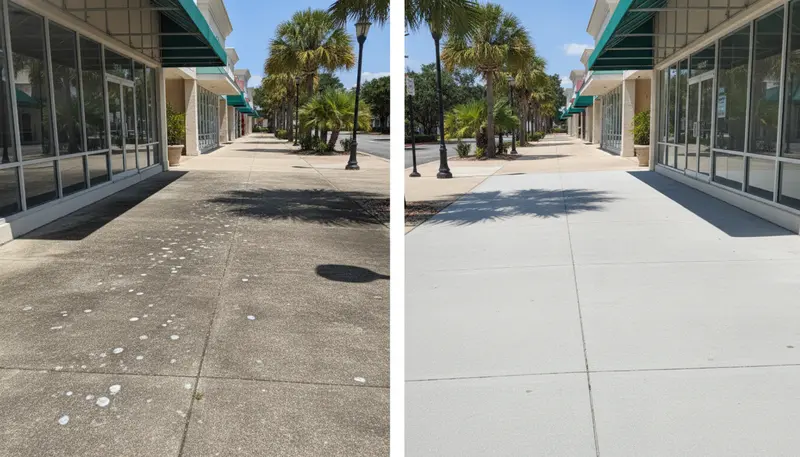
Why Baton Rouge Buildings Go Green
Drive down Siegen Lane or Bluebonnet Boulevard in Baton Rouge in late summer and look at the north side of any building. The stucco has a green tint. The brick has black streaks under the window sills.
The sidewalk in front of the entry is dark gray where it used to be white. That is algae, mildew, and mold, and it grows on every exterior surface in south Louisiana.
The recipe is simple. Average humidity above seventy percent, afternoon thunderstorms most of the summer, shade from live oaks, and warm nights that never let a surface fully dry. Spores land, find moisture, and spread. Concrete, stucco, brick, and painted metal all feed it.
Growth is not just a cosmetic issue. Algae on a sidewalk is slick when wet, and a slip-and-fall in front of your entry is a liability. Mildew on stucco holds moisture against the wall and shortens the life of the paint. Regular commercial pressure washing is the cheapest way to deal with all of it.
Soft Wash vs High Pressure: Matching the Method to the Surface
Pressure washing is really two different services, and using the wrong one damages property. High pressure is for hard, durable surfaces: concrete sidewalks, parking lots, dumpster pads, brick pavers, and unpainted block. The water does the work, and heat helps on oil and grease.
Soft washing is for everything else. Stucco, EIFS, painted surfaces, vinyl, wood, and most of what is on a building above the first floor. A cleaning solution is applied at low pressure, given time to kill the organic growth, then rinsed off gently. The chemistry does the work instead of the water.
Blasting stucco with high pressure drives water behind the finish, etches the surface, and leaves stripes that never come out. Soft washing the same wall leaves it clean and keeps the growth from coming back much longer. The treatment kills the spores instead of just knocking off the visible layer. Knowing which method to use on which surface is most of the job.
Brick and unpainted block sit in between. Old, soft brick with crumbling mortar gets a soft wash. Newer brick pavers and hard-fired block can take moderate pressure, but the mortar joints still get checked before the wand comes out.
Sidewalks, Entryways, Parking Lots, & Dumpster Pads
Every commercial property has the same handful of exterior problem areas, and each one has its own approach:
Entry walkways and sidewalks. Surface cleaner attachment with hot water, edges done by wand. This is the surface customers look at most, and it goes from clean to embarrassing in about ninety days here.
Entry canopies and columns. Soft wash for the underside and the columns, because that shaded area is where mildew grows first.
Parking lots. Surface cleaner in overlapping passes, with pre-treatment on oil spots in the parking stalls. Striping holds up fine when the pressure is kept reasonable.
Dumpster pads. Degreaser, hot water, and a rinse that pushes the runoff toward the proper drain instead of the storm inlet. Dumpster pads are also the biggest source of odor complaints on a retail property.
Drive-thrus. The lane surface collects dripped grease from the window and oil from idling cars. It gets hot water and degreaser at least monthly on busy locations.
Retail centers get the most out of bundling these. When our retail store cleaning crews already handle the interior, adding the exterior on a set cycle means one vendor, one schedule, and one invoice for the property manager.
Gum, Oil, & Drive-Thru Grease
Three stains do not come out with water alone, and all three are everywhere on retail and restaurant properties.
Gum: Flattened into the concrete and turned black, gum will not lift with pressure. It needs a hot water gum removal treatment, which softens each piece so it can be lifted without gouging the surface. A busy entry can have dozens of pieces per hundred square feet. Gum also tends to cluster right outside the entry doors and around the cart corral.
Oil: Parking stall drips soak into concrete and asphalt over months. Pressure alone spreads the stain and makes it bigger. A degreaser has to sit on the spot long enough to break the oil down before it gets rinsed out. Old stains lighten in stages over a few cleanings rather than disappearing in one.
Drive-thru grease: A film of cooking grease builds on the lane, the curb, and the wall under the window. It is slick, it attracts dirt, and it smells in August. Hot water and an alkaline degreaser on a monthly cycle keep it under control. The same treatment works on the service drive at a car dealership, where our dealership cleaning crews handle the write-up lane on a similar schedule.
How Often & How to Schedule Around Retail Hours
The honest answer to how often is: more often than you think, and less often than the wash itself suggests. Here is what works for most properties in the region:
Entry walkways and drive-thrus: monthly on high-traffic retail and restaurants, quarterly on offices.
Sidewalks and dumpster pads: quarterly.
Parking lots: twice a year, with spot cleaning of oil stains as needed.
Building exterior soft wash: once a year for most buildings, twice for heavily shaded north-facing walls.
Timing matters as much as frequency. Retail centers do not want a hose across the sidewalk at noon on Saturday.
We schedule exterior work early in the morning before stores open, late in the evening after they close, or on the property's slowest weekday. For restaurants, the drive-thru wash happens after the last car and before the breakfast crew arrives.
The route for our Baton Rouge commercial cleaning accounts is planned so the entry is dry and clear before the first customer pulls in. A wet, freshly washed sidewalk at opening time is a slip hazard, so the schedule always builds in drying time.
Multi-Story Buildings Along Baton Rouge Retail Corridors
The office buildings along Florida Boulevard and the medical and professional buildings off Bluebonnet run three to six stories. The ground floor gets the foot traffic, but the upper floors get the mildew, especially on the north and east faces that stay shaded until midday.
Upper-story exterior work is soft wash almost every time. The solution is applied from the ground with an extension wand or from a lift, allowed to work, and rinsed with low pressure. High pressure that high up is dangerous for the operator and damaging to the building. Windows, seals, and stucco all take damage from a wand blasting sideways from a lift.
Two-story retail along Siegen Lane, with tenant signage and storefront glass, needs care around the signs. Lit channel letters, awnings, and security cameras all get masked or worked around. Runoff is directed away from the entry doors and the storefront glass so the tenants do not open to water spots on Monday morning.
Signal Enterprises handles pressure washing as part of a full commercial cleaning scope rather than as a standalone trade. That is why we look at the exterior the same way we look at the lobby: as part of the property a customer judges. The background on Signal Enterprises explains how we approach every account. When you are ready for a walkthrough, request a free pressure washing quote with the property address and square footage.
Need the exterior of your property back to clean? Call (504) 669-6356 or send us the address and surface types and we will schedule the wash around your tenants' hours.
Frequently Asked Questions
Will pressure washing damage stucco or painted surfaces?
High pressure will. Soft washing will not. Stucco, EIFS, painted block, and anything above the first floor get a low-pressure application of cleaning solution that kills the mildew and algae, followed by a gentle rinse. The chemistry does the work instead of the water. Any vendor who wants to run a high-pressure wand across your stucco should not be allowed near the building.
How often should a retail center in Baton Rouge be pressure washed?
Entries and drive-thrus monthly, sidewalks and dumpster pads quarterly, parking lots twice a year, and a soft wash of the building exterior once a year. Shaded north-facing walls and anything under a live oak may need the exterior wash twice. Those numbers hold for most properties along Siegen, Bluebonnet, and Florida Boulevard, and we adjust after the first cycle based on how fast growth returns.
Can you pressure wash while the stores are open?
We prefer not to. Exterior work gets scheduled before opening, after closing, or on the slowest weekday, so no customer has to step over a hose or walk across a wet sidewalk. For restaurants, drive-thru washing happens between the last car of the night and the breakfast crew. The schedule always includes drying time so the entry is clear when the doors open.
Do you handle the runoff from washing a dumpster pad or parking lot?
Yes. Degreaser and wash water from dumpster pads and oil-stained parking areas are directed toward the appropriate drain rather than the nearest storm inlet. We plan the wash so runoff heads toward the sanitary drain where one is available. If your property has specific drainage requirements, let us know and we will plan the wash around them.