The Three Things Eating Your Floors
Walk into almost any commercial building between Baton Rouge and the Westbank in August and look down. The VCT is dull in the traffic lanes, the grout in the restroom has gone dark, and the carpet at the entry smells faintly of a wet dog. None of that is a cleaning failure. It is what south Louisiana does to floors.
Three forces do most of the damage. Humidity keeps every floor surface slightly damp, which softens finish and feeds mildew. Tracked-in grit from parking lots and construction acts like sandpaper under every footstep. Pollen from live oaks and pines coats floors in a fine yellow film from March through May.
Each of those attacks a different floor type in a different way. Below is how it plays out on VCT, grout, carpet, and concrete, along with the commercial floor care schedule that holds each one together.
VCT Finish: Why Wax Turns Yellow & Peels
Vinyl composition tile is the most common hard floor in offices, clinics, and retail across the region. It is cheap, durable, and easy to maintain when the finish is intact. The finish is the problem.
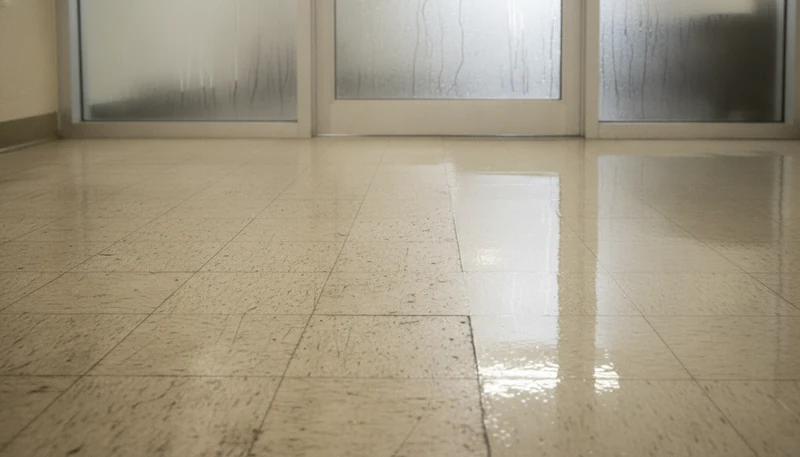
Floor finish is a thin acrylic coating that takes the abuse so the tile does not. In a dry climate it cures hard and stays that way. In our climate the finish never fully hardens on humid days, so grit embeds in it instead of sliding across it. Every scuff and black heel mark you see is grit dragged through soft finish.
Humidity also slows the drying time between coats during a strip and wax. Rush it, and the coats trap moisture and turn cloudy or yellow within a few months. That is why we schedule strip and refinish work for nights when the HVAC can run and the building can stay closed until the finish has cured.
Between full strips, burnishing is what keeps VCT looking right. A high-speed burnisher heats the finish and re-hardens the top layer, which restores gloss and pushes embedded grit back to the surface. Most offices need burnishing every two to four weeks and a full strip and refinish once or twice a year.
Grout & Mildew in Baton Rouge Restrooms & Break Rooms
Ceramic tile does not care about humidity. Grout does. Grout is porous, it sits below the tile surface where water pools, and it stays damp for hours after every mop. Crews handling commercial cleaning routes in Baton Rouge notice the worst of it in older restrooms with weak exhaust fans, where grout lines can stay wet around the clock.
Mildew moves in first, turning the grout gray and then black. Soap residue and body oils feed it. Once the mildew is in the pores of the grout, a mop will not remove it, and bleach only lightens the surface.
The fix is mechanical. A weekly scrub with a grout brush or a floor machine with a tile brush pulls the residue out of the pores before mildew can establish. Once a quarter, an alkaline degreaser followed by a rinse and a fan-assisted dry resets the grout. Sealing grout after a deep clean buys months of protection, but only if it is done on a dry floor.
Break rooms carry the same risk with a different source. Grease and food splatter land on the grout near the sink and the microwave, and the refrigerator drip pan feeds a damp spot behind the appliance. Employee break areas in stores along Florida Boulevard and Siegen Lane show this constantly. That is why our retail store cleaning crews treat back-of-house grout as a weekly task rather than a monthly one.
Carpet Extraction & Drying Times in Humid Air
Carpet in a Louisiana office is a sponge. Every wet shoe, every spilled coffee, and every humid night adds moisture to the backing. Grit works down through the pile and cuts the fibers at the base, which is why traffic lanes go gray and flat long before the rest of the carpet.
Hot water extraction is the only method that pulls that grit and residue back out. The problem is drying. In a dry climate, extracted carpet dries in four to six hours. Here, on a humid night with the HVAC off, it can stay damp for a full day, and damp carpet in a closed building grows mildew in the backing.
We handle this three ways. First, we extract with as little water as possible and make extra dry passes to recover it. Second, we place air movers on the wettest lanes and run them until the crew leaves. Third, we ask the building to keep the HVAC running overnight after extraction, because moving air at seventy degrees dries carpet faster than anything else we can do.
Frequency depends on traffic. Lobby and corridor carpet in a busy building needs extraction every quarter. Private offices can go six to twelve months. Weekly vacuuming with a HEPA-filtered upright is what stretches the time between extractions, because it pulls grit out before it cuts fibers.
Polished Concrete in Westbank Warehouses
Polished and sealed concrete is the floor of choice in the distribution and industrial buildings around Harvey, Marrero, and the river-side industrial corridor on the Westbank. It handles forklifts, it does not peel, and it does not need wax. It still needs care.
Humidity affects concrete from below as much as above. Moisture vapor moves up through the slab, and in a building without a proper vapor barrier it can lift sealers and leave white mineral deposits on the surface. Forklift tires grind tracked-in grit into the polish, and oil drips from equipment soak into any spot where the sealer has worn thin.
The maintenance rhythm is simple but has to be consistent. Daily dust mopping or ride-on sweeping keeps the grit off. Weekly auto-scrubbing with a neutral cleaner lifts the film that dulls the polish. Every year or two, depending on traffic, the floor gets re-honed and resealed.
Our industrial facility cleaning crews build that rhythm into the regular schedule instead of treating it as a separate project. It is the same routine we run for commercial cleaning accounts on the Westbank, from Gretna to Westwego.
Entry Matting & the Cadence That Saves Floors
Everything above gets easier with one change: stop the grit at the door. A proper entry mat system is fifteen to twenty feet of matting in three stages. A scraper mat outside knocks off the heavy mud.
A scraper-wiper mat in the vestibule pulls off grit. A wiper mat inside takes the last of the moisture.
Mats only work if they are maintained. A saturated mat stops absorbing and starts tracking water inward. In summer our crews vacuum entry mats every visit and lift them weekly to dry the floor underneath. A wet floor under a mat is where VCT finish fails first.
Put the whole thing together and the cadence looks like this: daily dust mop and damp mop, weekly grout scrub and full vacuum, burnishing every two to four weeks. Add carpet extraction quarterly and a strip and refinish once or twice a year. If your building does not have a written floor care schedule, request a free floor care quote and we will put one together after a walkthrough.
If your floors already look tired, the fix is a program, not a one-time buff. Call (504) 669-6356 or tell us your floor types and we will map out a restorative and interim schedule.
Frequently Asked Questions
How often should VCT floors be stripped and waxed in Louisiana?
Once or twice a year for most offices and clinics, and up to three or four times for high-traffic retail. Humidity softens finish and lets grit embed, so floors here wear faster than in a dry climate. Burnishing every two to four weeks between strips is what keeps the finish hard and the floor looking right, and it pushes the full strip out as long as possible.
Why does my grout keep turning black even though it gets mopped every night?
Mopping pushes dirty water into the grout lines, where it sits below the tile surface and stays damp. Mildew grows in the pores, and once it is in there a mop cannot reach it. The fix is a weekly mechanical scrub with a grout brush or floor machine, a quarterly deep clean with a degreaser, and a sealer applied to a fully dry floor.
How long does carpet take to dry after extraction in humid weather?
Anywhere from six hours to a full day depending on the airflow. We extract with minimal water, run air movers on the traffic lanes, and ask the building to keep the HVAC on overnight. With the air running, most carpet is dry by morning. With the air off in July, it may still be damp at noon, and that is when mildew starts in the backing.
Do you handle floor care for warehouses and industrial buildings?
Yes. Polished concrete, sealed concrete, and epoxy floors in warehouses and light industrial buildings are part of our regular work across Jefferson Parish and Baton Rouge. That includes daily sweeping, weekly auto-scrubbing, and periodic re-sealing. Give us the square footage and floor type and we will walk the building with you.